Every year, millions of animals travel thousands of kilometers across land, sea, and air in one of nature’s most extraordinary phenomena known as animal migration. From birds flying across continents to whales crossing vast oceans, migration is a powerful survival strategy that has evolved over thousands of years.
Animal migration refers to the seasonal movement of animals from one region to another in search of better living conditions. These journeys are often dangerous and exhausting, yet animals continue to migrate because it increases their chances of survival and reproduction.
Understanding why animals migrate helps scientists learn more about ecosystems, climate patterns, and the incredible instincts animals possess.
What is Animal Migration?
Animal migration is the regular, seasonal movement of animals between different habitats. These movements usually happen during specific times of the year and are often triggered by environmental changes such as temperature, food availability, or breeding needs.
Migration can occur over short distances or across entire continents. Some animals travel only a few kilometers, while others journey thousands of kilometers every year.
For example, many bird species migrate from colder regions to warmer climates during winter and return when the weather becomes favorable again.
Why Do Animals Migrate?
Animals migrate for several important reasons related to survival and reproduction. These journeys are usually driven by natural instincts that help animals find better conditions.
1. Searching for Food
One of the main reasons animals migrate is to find food. In many regions, food availability changes with the seasons.
For example, when winter arrives in colder areas, insects, plants, and other food sources become scarce. Birds that rely on insects must migrate to warmer regions where food is still available.
Large animals such as wildebeest also migrate across African plains to follow fresh grass and water sources.
2. Breeding and Reproduction
Many animals migrate to specific locations to reproduce. These breeding grounds provide safer environments where offspring have a higher chance of survival.
Sea turtles, for instance, travel thousands of kilometers across oceans to return to the same beaches where they were born. There, they lay their eggs before returning to the sea.
Similarly, salmon migrate from oceans back to the freshwater rivers where they hatched in order to spawn.
3. Avoiding Harsh Weather
Seasonal weather changes can make certain habitats difficult or impossible for animals to survive in.
During winter, extremely cold temperatures and snow can limit food supplies and make survival challenging. Migrating to warmer regions allows animals to avoid these harsh conditions.
Many birds fly south during winter and return north during spring when temperatures become suitable again.
4. Finding Safe Habitats
Migration also helps animals find environments that provide better protection from predators or safer places for raising their young.
Some animals choose breeding areas with fewer predators or abundant resources that help their offspring grow quickly.
These safer environments increase the chances that the next generation will survive.
Types of Animal Migration
Migration occurs in different ways depending on the species and their environment. Scientists generally classify migration into several types.
Seasonal Migration
This is the most common type of migration. Animals move between habitats depending on the season.
Birds migrating between northern and southern regions during summer and winter are a well-known example of seasonal migration.
Altitudinal Migration
In this type of migration, animals move up or down mountains instead of traveling long horizontal distances.
Many animals living in mountainous regions move to lower altitudes during winter where temperatures are warmer and food is easier to find.
Oceanic Migration
Marine animals also migrate across large distances in the oceans. Many fish, whales, and sharks travel thousands of kilometers each year.
Whales often migrate from cold feeding areas to warm tropical waters where they give birth to their young.
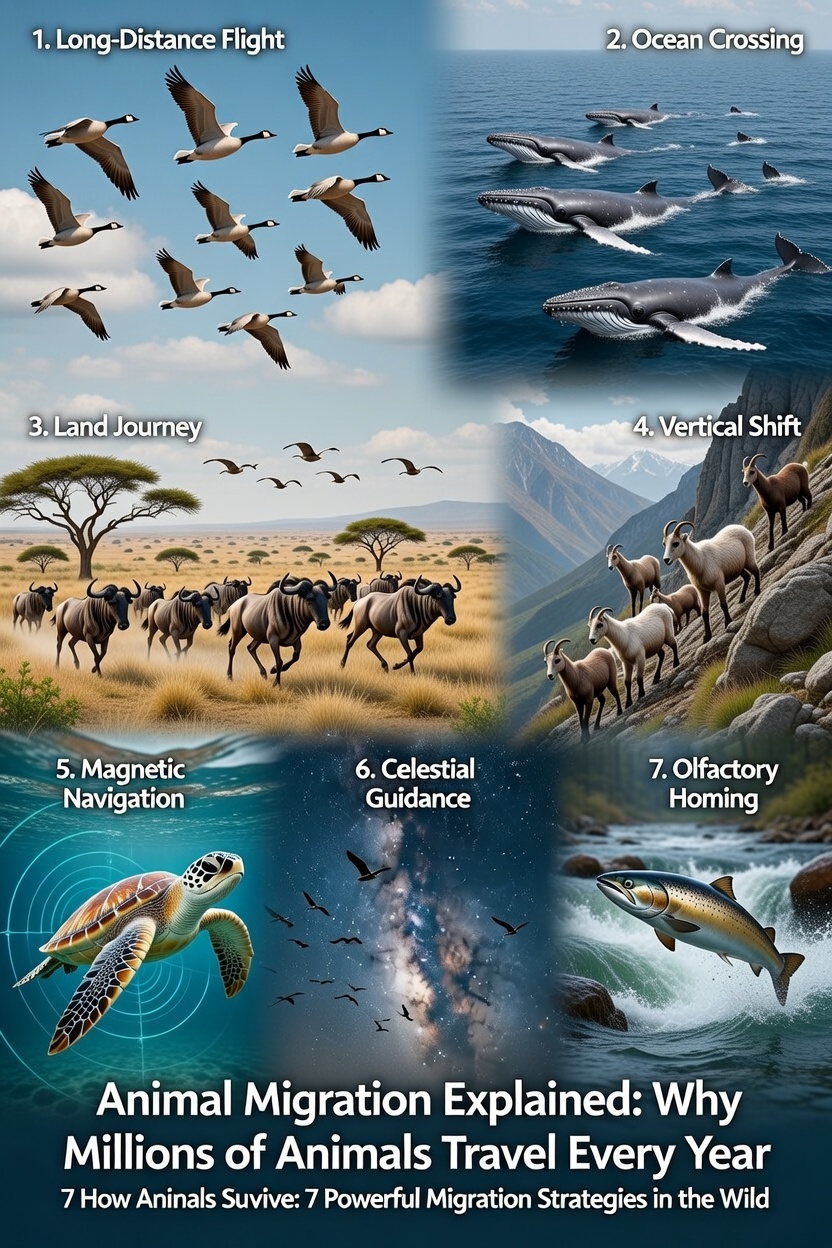
How Animals Navigate During Migration
One of the most fascinating aspects of migration is how animals know where to go. Despite traveling enormous distances, many animals return to the same locations year after year.
Scientists believe animals use several natural navigation systems.
Earth’s Magnetic Field
Many animals can detect the Earth’s magnetic field, which acts like a natural compass. Birds, sea turtles, and some fish use this ability to maintain direction during long journeys.
The Sun and Stars
Some animals navigate using the position of the sun during the day and stars at night. Birds, in particular, are known to use celestial navigation to guide their migration.
Landmarks and Smell
Animals such as salmon use their sense of smell to locate the exact river where they were born. They can recognize unique chemical signatures in the water that guide them back to their birthplace.
Famous Animal Migrations
Several migrations in the animal world are considered among the most impressive natural events.
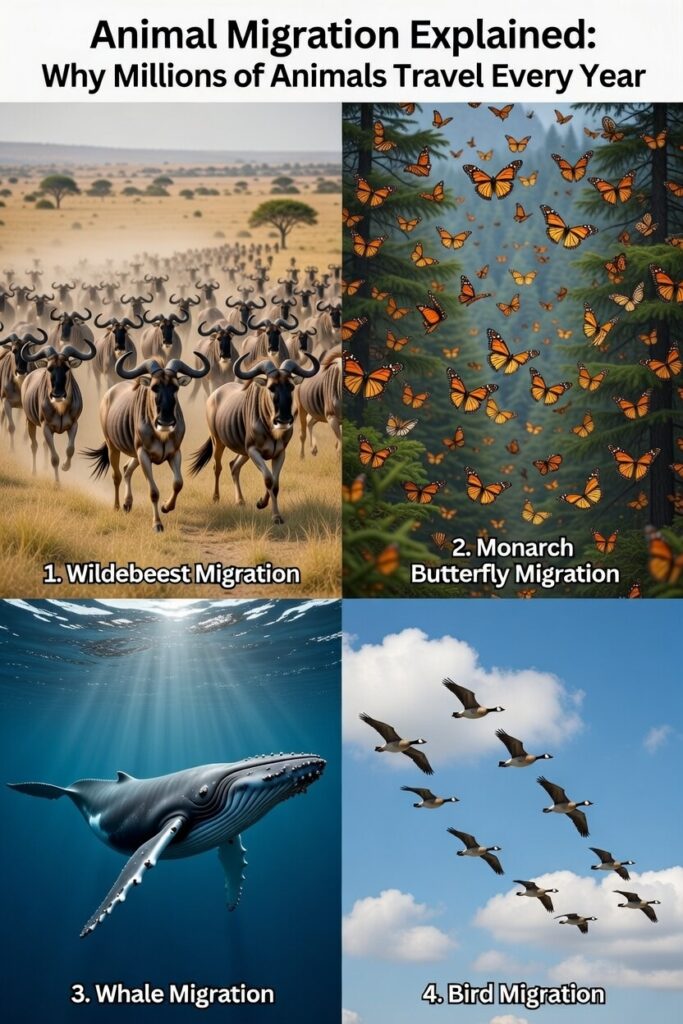
The Great Wildebeest Migration
One of the largest land migrations occurs in East Africa, where millions of wildebeest travel across the Serengeti and Maasai Mara ecosystems in search of fresh grass and water.
This migration involves more than 1.5 million animals, including zebras and gazelles, and covers hundreds of kilometers.
Monarch Butterfly Migration
The monarch butterfly migration is one of the most remarkable journeys among insects. These butterflies travel thousands of kilometers from North America to central Mexico during winter.
What makes this migration extraordinary is that the butterflies completing the journey are often several generations removed from the ones that started it.
Whale Migration
Many whale species migrate annually between feeding and breeding grounds. Humpback whales, for example, travel from cold polar waters to warm tropical seas to give birth.
These migrations can span over 8,000 kilometers, making them among the longest journeys in the animal kingdom.
Challenges During Migration
Although migration is essential for survival, it is also extremely risky. Animals face many challenges during their journeys.
Predators often target migrating animals because large groups make easy targets. Harsh weather conditions, exhaustion, and lack of food can also threaten migrating species.
Human activities such as habitat destruction, pollution, and climate change are increasingly affecting migration routes. Many animals struggle to adapt to these changes.
Why Protecting Migration Matters
Animal migration plays a crucial role in maintaining healthy ecosystems. Migrating species help spread nutrients, control populations, and support biodiversity.
Protecting migration routes and habitats ensures that these incredible journeys continue for future generations.
Conservation efforts such as wildlife corridors, protected areas, and international agreements help safeguard migratory species around the world.
Conclusion
Animal migration is one of nature’s most extraordinary survival strategies. Every year, millions of animals embark on long and dangerous journeys to find food, reproduce, and escape harsh environments.
From birds navigating by the stars to whales crossing entire oceans, migration demonstrates the remarkable instincts and adaptability of wildlife.
As scientists continue studying migration patterns, we gain a deeper understanding of the natural world and the importance of protecting these incredible travelers and the ecosystems they depend on. 🌍🐋🦋